
Can Security Cameras Record Audio?
Many homeowners and business owners considering security cameras wonder if these devices can record audio. There is some confusion about whether audio recording is standard, optional or legal in Massachusetts and New England.
Understanding the relevant legal requirements and how audio features work helps property owners maximize security while staying compliant.
Do Security Cameras Have Audio?
Not all security cameras record audio by default. While video recording is standard, audio capabilities vary by model, type and setting. Exploring different camera options helps you choose the right system for your needs.
Types of Audio Features in Security Cameras
Modern security cameras offer different audio capabilities depending on your monitoring needs:
- Built-in microphones: Many modern internet protocol (IP) cameras and video doorbells include integrated microphones for sound capture.
- External microphone attachments: Some analog or older systems require separate microphone units wired to the recorder.
- Audio input/output ports: Cameras may have jacks or RCA connectors for adding audio capability.
One-Way Audio vs. Two-Way Audio
Audio-enabled cameras typically offer one of two communication methods:
- One-way audio: The microphone typically records ambient sounds within about 20 feet. One-way audio is common in basic surveillance systems.
- Two-way audio: A microphone and speaker can be used for real-time communication through your smartphone. Two-way audio is ideal for greeting visitors or deterring intruders.
Which Cameras Include Audio Recording?
The following are common examples of security cameras that feature audio recording:
- Video doorbells: Nearly all smart doorbells include two-way audio as a standard feature.
- Indoor security cameras: Most Wi-Fi-connected indoor cameras have built-in microphones.
- IP cameras: Network-based cameras often support audio recording.
- Wireless security cameras: Battery-powered and Wi-Fi models typically include microphones.
- Analog CCTV systems: Usually video-only and require external microphones for audio.
Always check product specifications to confirm audio capabilities before purchasing.
How to Tell If a Security Camera Has Audio
If you’re evaluating an existing camera or shopping for a new system, several methods can help you determine whether audio recording is available.
Your camera’s software often indicates audio capability:
- App audio settings: Open your camera’s mobile app and look for microphone/speaker icons or audio sensitivity controls.
- Live view test: Enable audio in live feed — if you hear ambient sound, the mic is active.
- Toggle options: Look for “enable/disable audio” switches in the settings menu.
- Volume sliders: Presence of audio volume controls confirms capability.
- Two-way talk button: The microphone icon during live viewing indicates two-way audio is available.
A physical inspection for the following indicators often reveals audio capabilities:
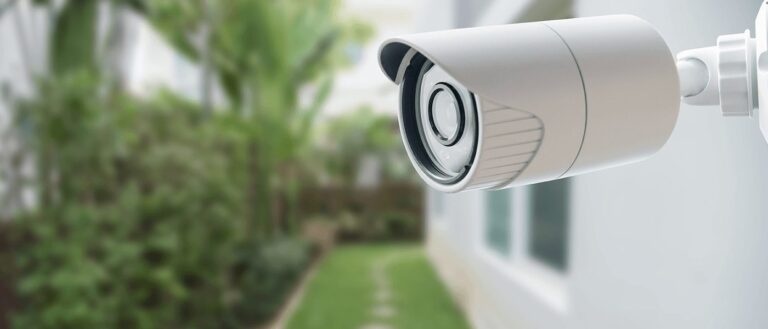
- Tiny pinhole near the lens: Often smaller than a pinhead, it usually indicates a built-in microphone.
- Speaker grille: Small round grille with multiple tiny holes, often on the back or side, suggests two-way audio capability.
- Multiple components: Small spherical or box-shaped attachments connected by wires equal an external microphone.
- Reset button vs. mic hole: If unlabeled, the pinhole is likely a microphone, not a reset button.
Video doorbells are specifically designed with audio communication as a core feature. Most include visible speaker grilles and microphone holes. When someone presses the doorbell, you receive a notification on your smartphone with live video and audio, allowing you to speak with visitors in real time without opening the door.
Audio Recording Laws in Massachusetts and New England
Understanding the legal landscape is critical before enabling audio recording on your security cameras. Federal and state laws regulate when and how you can record conversations, with Massachusetts having some of the strictest requirements in the country.
One-Party Consent Standard in Federal Law
At the federal level, the Wiretap Act allows audio recording if at least one person in the conversation consents, known as one-party consent. However, states can impose stricter requirements.
Massachusetts All-Party Consent Law
Massachusetts follows one of the nation’s strictest audio recording laws. The state’s requirements include:
- All-party consent required: Everyone in the conversation must agree to be recorded.
- Private conversations protected: Applies when people have a reasonable expectation of privacy.
- Criminal penalties: Violations are felony offenses punishable by fines and imprisonment.
- Inadmissible evidence: Illegally recorded audio cannot be used in court.
- Security camera implications: Audio recording in private areas, like inside homes or offices, requires consent from all parties.
Other New England States’ Consent Requirements
Other New England states have varying requirements. Connecticut, New Hampshire and Massachusetts require all-party consent, while Rhode Island and Maine follow the one-party consent law, and Vermont doesn’t have a clear rule. Other states that include this type of consent include California, Delaware, Florida, Illinois and more. If recording near state borders, apply the strictest standard, which is all-party consent, to ensure compliance.
When Audio Recording Is Legal in Massachusetts
Legal scenarios for security camera audio recording include:
- Recording conversations with all parties’ consent.
- Posted signage notifying all parties of audio surveillance.
- Video doorbells capturing audio from front porches or entry points.
Illegal scenarios include:
- Recording private conversations without all parties’ knowledge.
- Audio surveillance in bathrooms, bedrooms or changing rooms.
- Hidden microphones recording conversations without consent.
When in doubt, disable audio recording or consult with security professionals who understand Massachusetts privacy laws.
Benefits of Security Cameras With Audio Capabilities
While legal compliance is essential, audio-enabled security cameras offer significant advantages for home and business security when used appropriately. From real-time communication to enhanced evidence collection, audio features add a powerful layer of protection.
Two-Way Communication with Visitors
Two-way audio transforms security cameras from passive recording devices into interactive communication tools. Benefits include:
- Screen visitors before opening the door: See and speak with delivery personnel, salespeople or unexpected visitors without physical contact.
- Provide delivery instructions remotely: Guide package carriers to safe drop-off locations even when you’re away from home.
- Avoid unwanted interactions: Politely dismiss solicitors or canvassers without opening the door.
Enhanced Evidence Collection
Audio recordings provide crucial context that video alone cannot capture, making security footage more valuable for investigations and legal proceedings. Here is how audio enhances evidence:
- Voice identification: Audio helps law enforcement identify perpetrators through voice recognition.
- Intent demonstration: Spoken words can prove criminal intent that visual evidence alone cannot show.
- Verbal threats captured: Record exact words used during confrontations or disputes.
Real-Time Crime Deterrence and Intervention
Audio intervention capabilities allow property owners and monitoring services to actively prevent crime rather than simply recording it. Deterrence capabilities include:
- Live warnings to trespassers: Use two-way audio to verbally warn potential intruders that they’re being watched and police have been notified.
- Alarm verification: Audio helps monitoring centers verify real emergencies vs. false alarms before dispatching authorities.
- Reduced false dispatches: Audio verification can reduce false alarm police responses, which some municipalities fine.
Two-way audio intervention can prevent incidents from escalating into crimes that require a police response.
Peace of Mind for Homeowners and Business Owners
Beyond security applications, audio-enabled cameras provide daily convenience and reassurance:
- Monitor elderly relatives: Check in verbally with aging parents or family members through indoor cameras.
- Verify alarm events: Quickly determine if alerts are legitimate emergencies or false triggers.
- Protect packages: Give real-time delivery instructions to prevent porch piracy.
Protect Your Home With Professional Audio-Enabled Security Solutions
Wayne Alarm Systems offers professional installation of SkyBell video doorbell systems featuring two-way audio, HD video and seamless mobile integration. Our background-checked, experienced technicians ensure proper setup and provide guidance on Massachusetts consent laws and privacy regulations.
With over 50 years of experience serving Massachusetts and New England, we deliver reliable security solutions you can trust. Don’t risk poor-quality DIY installations or legal complications.
Request a free consultation from Wayne Alarm Systems to discuss the right audio-enabled security solution for your home or business.