Ultrasonic Sniffer
Ultrasonic Sniffer
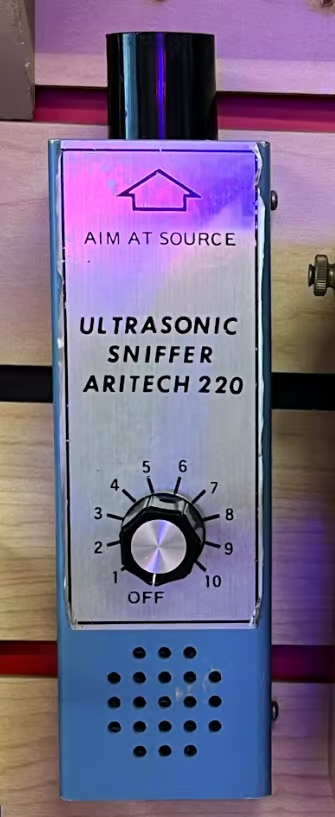
Some alarm systems utilize ultrasonic sensors to detect disturbances. By emitting waves of noise higher than humans can hear, these devices measure the time between sending the sound out and receiving it back to determine if something out of the ordinary is occurring. Because these devices pick up on sound waves, certain noises can interfere with their accuracy. Things like hissing radiators and telephone bells could create false alarms.
The Doppler effect describes the change in the frequency of a wave in relation to an observer. Sounds have a higher frequency—and thus a higher pitch—when the thing emitting the sound waves is moving toward the observer, and a lower frequency when the thing is moving away from the observer.
Using the Doppler effect, the Ultrasonic Sniffer allowed alarm technicians to narrow down where a false alarm was coming from. Technicians would bring the device around to different areas of rooms where false alarms were going off to determine where the interfering sound waves were coming from.
Ultrasonic detectors haven’t been used in burglar alarms for decades. The development of the passive infrared detector made them obsolete. Because of this, ultrasonic sniffers have also fallen out of use.