Fire Insurance Marks
Fire Insurance Marks
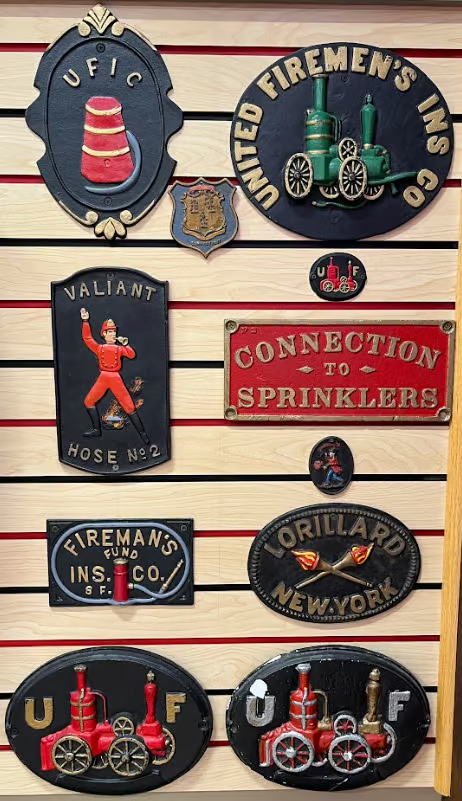
In 1752, Benjamin Franklin started the first successful American fire insurance company: The Philadelphia Contributionship. This company provided fire insurance to a limited area in and around Philadelphia. Inspired by the British fire insurance companies that sprung up after the 1666 Great Fire of London, The Philadelphia Contributionship’s rates were based on a property inspection and risk assessment. Many more fire insurance companies across the country then followed this European-based fire insurance model.
Each fire insurance company had its own placard—called a fire insurance mark, fire mark, or fire plaque—that would be displayed on a building’s façade. In the event of a fire, this placard would prove that the building was insured. The placards were made out of metal to ensure that they survived the fire.
In the 18th century, the majority of fire brigades in the United States were made up of volunteers. These volunteers were paid only occasionally by fire insurance companies when they put out a fire at an insured building. The fire insurance mark let them know whether a building was insured or not. Legend has it that the volunteer firefighters would refuse, delay, or not fully commit to putting out fires and saving belongings at uninsured buildings because they would not be paid for their work.
Often, an insurance agent would be present when an uninsured building was burning down. They would offer the owners the chance to buy a policy on the spot; incentivizing the volunteers to work harder and allowing the owner to recoup some of their loss.
Unpaid volunteer fire brigades were not the only method of firefighting in early America. In 1678, Boston established the first first publicly funded, paid fire department on the continent. It took until the 19th century for the rest of the country to follow. Fire departments then became paid municipal services and fire insurance marks fell out of use.