

When Should I Replace My Smoke Detectors?
Smoke detectors save lives — when they work properly. In a study of residential fire fatalities in recent years, 16% happened in homes where smoke detectors failed to operate.
These devices have sensors that degrade over time due to dust, humidity and normal aging. Even if your alarm still beeps during monthly tests, the internal components may no longer detect smoke reliably. For that reason, the U.S. Fire Administration recommends you change your smoke detector 10 years from the manufacturer’s date.
How Smoke Detectors Age
Smoke detectors rely on sensors to detect particles in the air. The two main types, ionization and photoelectric, both experience gradual sensor degradation over time. Ionization detectors contain a small amount of radioactive material that weakens naturally. Photoelectric sensors accumulate dust on their internal components, which reduces sensitivity even with regular cleaning.
The electronics inside the device also deteriorate. Solder joints loosen, capacitors dry out and wiring connections weaken regardless of how often you replace batteries.
Detectors usually chirp when batteries are low, but most don’t include an end-of-life warning signal. You need to check the manufacture date printed on the back of each unit. If the date shows 10 years or older, replacement is overdue.
Essential Steps for Reliable Smoke and Carbon Monoxide Detection
Knowing when to replace your smoke and carbon monoxide detectors is important, but it’s just one part of keeping your home protected. Follow these essential steps to make sure your alarms work properly and are up to date.
Look for Warning Signs Before the 10-Year Mark
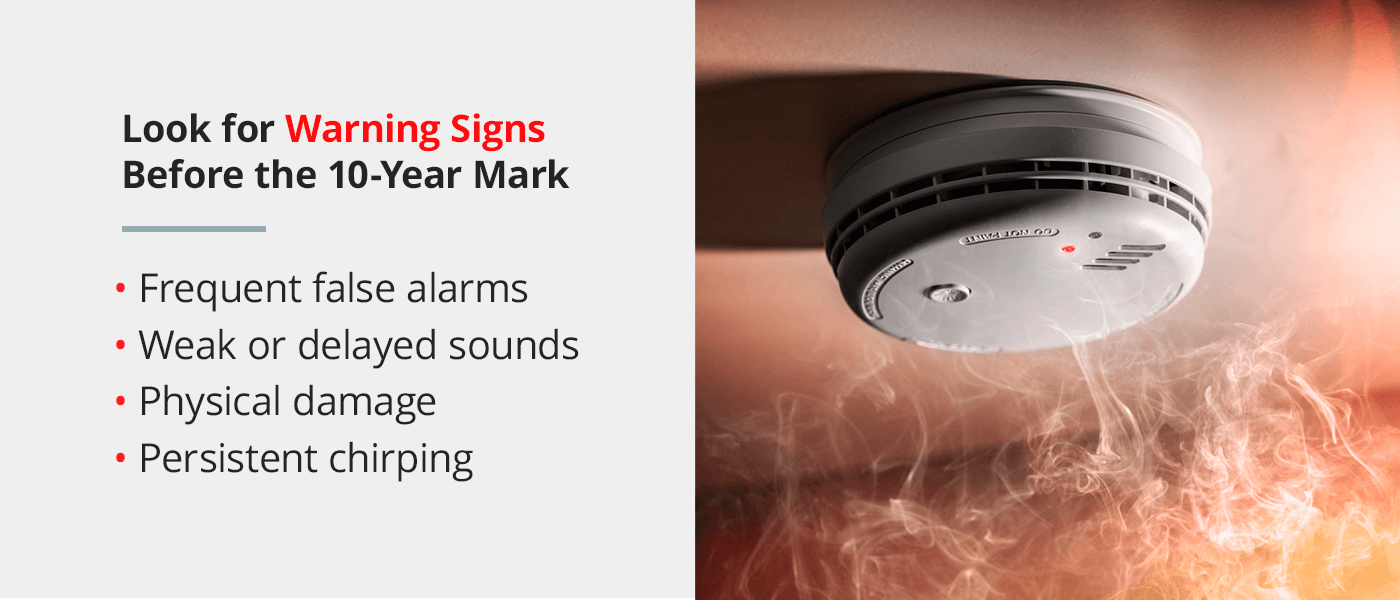
Even before the 10-year mark, your system may need attention. Signs of a system that needs to be replaced include:
- Frequent false alarms, especially if there is no visible smoke or steam.
- Weak or delayed sounds during testing.
- Physical damage, such as yellowing plastic, cracks in the casing or visible dust buildup inside the vents.
- Persistent chirping, even after you install fresh batteries.
Replace Your Carbon Monoxide Detectors on a Different Schedule
Carbon monoxide detectors follow a different replacement timeline than smoke alarms. It’s best to replace stand-alone CO detectors every seven to 10 years, depending on the manufacturer and model. If you have a combination smoke and carbon monoxide detector, aim to replace it after seven years — the CO sensor has a shorter lifespan than the smoke sensor.
Carbon monoxide is colorless and odorless, making working detectors absolutely critical for safety. Many CO alarms now include an end-of-life warning that chirps every 30 to 60 seconds when the unit needs to be replaced. Check each CO detector in your home for its specific replacement interval listed in the user manual or on the device itself.
Install Replacement Detectors Correctly
Proper installation ensures your new detectors provide maximum protection. Keep these tips in mind for proper smoke detector placement:
- Install residential fire and smoke detectors on every level of your home, including the basement.
- Place them inside each bedroom and outside every sleeping area in hallways or common spaces.
- Mount detectors on ceilings at least 4 inches from walls — or on walls between 4 and 12 inches below the ceiling.
- Avoid placing them near windows, doors, vents or ceiling fans where drafts could interfere with smoke detection.
- Keep them at least 10 feet away from cooking appliances to reduce nuisance alarms.
- For optimal protection, interconnect your smoke detectors so that when one sounds, they all sound through the house. Many modern detectors offer wireless interconnection, eliminating the need for hard-wiring between units.
Maintain Your Detectors Between Replacements
Regular maintenance extends detector reliability and reduces false alarms. Here are tips on how to change smoke detector batteries to keep your system functioning optimally:
- Check your smoke alarm and carbon monoxide detector monthly by pressing the test button until you hear the alarm. This verifies the battery, speaker and basic circuitry function properly.
- Vacuum around detector vents every six months to remove dust and debris that can interfere with sensors. Use the soft brush attachment on your vacuum cleaner and gently clean the exterior without removing the unit from its mounting bracket.
- Never paint over smoke detectors, as this blocks vents and prevents proper airflow to the sensors.
- Replace standard alkaline batteries at least once per year, even if they haven’t triggered a low-battery chirp. Many people change batteries when they adjust clocks for daylight saving time, creating an easy-to-remember schedule.
Protect Your Home With Professional Fire Safety Solutions
Replacing smoke detectors on schedule is essential to protect your home and family from fire hazards. If you’re unsure about the age of your current detectors or want to upgrade to an interconnected system with professional monitoring, Wayne Alarm Systems can help. We offer commercial and residential fire detection solutions throughout Massachusetts and New England.
With more than 50 years of experience, we’re a team you can count on for expert installations — whether you need a smoke alarm, home carbon monoxide detector system or complete fire alarm system. Every technician holds a certificate of clearance and undergoes thorough background checks, ensuring qualified professionals handle your home’s safety equipment.
Contact Wayne Alarm Systems today for a free security consultation.